
Description
Scientific Name
Solanum scabrum
(often grouped within the Solanum nigrum complex)
Origins
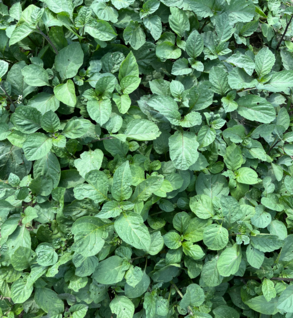
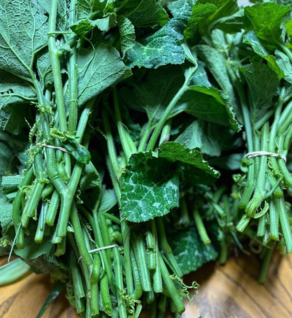
Njama Njama is an indigenous leafy vegetable native to Cameroon, especially common in the North-West and South-West Regions. It is a cornerstone of traditional Cameroonian cuisine and is widely consumed across Central Africa and parts of West Africa.
Historically, Njama Njama has been both a subsistence and market vegetable, valued for its resilience, flavor, and nutritional benefits.
Nutritional Value
Njama Njama is a highly nutritious leafy green, often regarded as a natural strength-giving vegetable. It is rich in:
- Iron – supports blood production and helps prevent anemia
- Vitamin A – supports vision, skin health, and immunity
- Vitamin C – boosts immune function and enhances iron absorption
- Calcium & Magnesium – support bone and muscle health
- Dietary fiber – aids digestion and gut health
- Antioxidants – help reduce inflammation and oxidative stress
Because of its nutrient density, Njama Njama is commonly recommended for pregnant women, nursing mothers, and individuals recovering from illness.
Scientific Name
Solanum scabrum
(often grouped within the Solanum nigrum complex)
Other Names
- Garden Huckleberry
- African Nightshade
- Black Nightshade (edible variety)
- Managu (Kenya)
- Osuga (East Africa)
How It Is Grown
Njama Njama is a fast-growing warm-season leafy vegetable that thrives in tropical and subtropical climates.
- Soil: Prefers fertile, well-drained loamy soil enriched with organic matter
- Climate: Warm temperatures with moderate rainfall
- Planting: Grown from seeds, either direct-seeded or transplanted
- Watering: Requires regular watering, especially during early growth
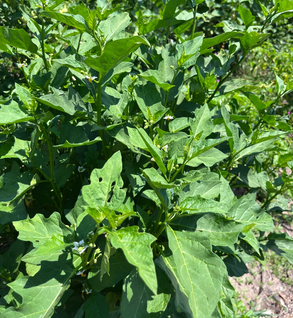
- Growth habit: Upright, bushy plant with tender edible leaves
- Harvesting: Leaves can be harvested starting 4–6 weeks after planting
- Maintenance: Frequent harvesting encourages continuous and tender regrowth
Reviews
There are no reviews yet.